PsyPost
  • Mental Health
  • Social Psychology
  • Cognitive Science
  • Neuroscience
  • About
No Result
View All Result
Join
My Account
PsyPost
No Result
View All Result
Home Exclusive Mental Health

Psychopathic traits may have distinct neurobiological correlates in youth

by Eric W. Dolan
December 13, 2020
Reading Time: 2 mins read
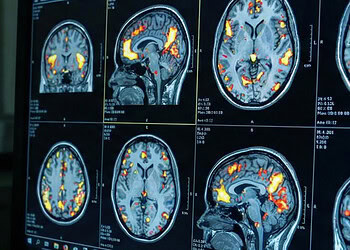
(Photo credit: National Institutes of Health)

(Photo credit: National Institutes of Health)

Share on TwitterShare on Facebook

Different dimensions of psychopathic traits are associated with different brain abnormalities in youth, according to new research published in the Journal of Psychiatric Research.

“As a neuropsychologist, the neuropsychology of psychopathy has been one of my research interests. More importantly, prior studies have largely focused on adult psychopathy and whether the same brain correlates apply to adolescents whose neuropsychological functioning is drastically changing over time warrants investigation,” said study author Bess Yin-Hung Lam, a research assistant professor at The University of Hong Kong.

In the study, the psychopathic traits of 29 children living in Brooklyn, New York, were assessed when they were 7 to 10 years old. Four years later, the participants underwent magnetic resonance imaging (MRI) of the brain to assess gray matter volumes.

The researchers found that psychopathic traits were associated with asymmetries in the medial orbitofrontal cortex (mOFC), a brain region implicated in behavioral regulation and moral reasoning. Participants with greater callous-unemotional traits tended to have a smaller right mOFC as compared to the left mOFC. Those with higher levels of impulsivity, on the other hand, tended to have a smaller left mOFC when compared to the right.

The findings indicate that “dimensions of psychopathic traits (callous-unemotional traits, narcissism, and impulsivity) may have distinct neurobiological correlates,” Lam told PsyPost. “Ultimately, the current research study furthers our understanding of the early neural correlates of psychopathic traits and may potentially aid in the prevention of crime (e.g., non-invasive brain stimulation intervention) in adulthood.”

The researchers controlled for age, sex, intelligence, pubertal stage, and whole-brain volumes. But as with any study, the research includes some limitations.

“The present study did not confirm the causal relationship between psychopathic traits and the specific brain region of interest but the present findings can set up the foundation to test the relationship between the two in future studies. Future studies should also investigate an adolescent group with conduct disorder and compare them to a neurotypical sample for a better understanding of distinct neurobiological correlates associated with different psychopathic traits,” Lam explained.

“Prior literature has shown that psychopathic traits are among the most significant risk factors for antisocial behaviors. Specifically, half of the crimes in the U.S. were committed by adults who had shown psychopathic traits during adolescence. These criminal behaviors incur enormous psychological and financial burden for individuals’ families and society. Hence, it is essential to understand the etiology of these problematic traits and behaviors at early ages,” she added.

Google News Preferences Add PsyPost to your preferred sources

The study, “Gray matter asymmetry in the orbitofrontal cortex in relation to psychopathic traits in adolescents“, was authored by Bess Yin-Hung Lam, Yonglin Huang and Yu Gao.

RELATED

Dark personality traits predict manipulation and aggression in romantic relationships
Depression

Depression worsens rapidly in the final four years of life

May 4, 2026
One specific reason for having sex is associated with higher stress levels the next day
Addiction

Brain scans reveal a universal neural signature for addiction

May 4, 2026
Gamified digital mental health interventions show modest effects in treating youth with ADHD and depression
Autism

Unexpected bilingualism is surprisingly common among young autistic children

May 4, 2026
Even a little exercise could significantly lower dementia risk
Dementia

Better cardiorespiratory fitness is linked to a lower risk of dementia and depression

May 4, 2026
Children and teens with ADHD struggle with object recognition memory
ADHD Research News

Children with ADHD are six times more likely to experience depression

May 3, 2026
Both men and women view a partner’s financial investment in a rival as a major relationship threat
PTSD

Researchers map trauma symptoms among Palestinian refugees

May 3, 2026
How looking after your willpower can help you reduce stress and stay productive, wherever you are working
Business

Natural daylight in the office helps people with type 2 diabetes control blood sugar

May 3, 2026
Both men and women view a partner’s financial investment in a rival as a major relationship threat
Mental Health

New study links identity politics to lower mental well-being among progressives

May 3, 2026

Follow PsyPost

The latest research, however you prefer to read it.

Daily newsletter

One email a day. The newest research, nothing else.

Google News

Get PsyPost stories in your Google News feed.

Add PsyPost to Google News
RSS feed

Use your favorite reader. We also syndicate to Apple News.

Copy RSS URL
Social media
Support independent science journalism

Ad-free reading, full archives, and weekly deep dives for members.

Become a member

Trending

  • Both men and women view a partner’s financial investment in a rival as a major relationship threat
  • Brain scans of 800 incarcerated men link psychopathy to an expanded cortical surface area
  • The gender friendship gap is driven primarily by white men, not a universal difference across groups
  • General intelligence explains the link between math and music skills
  • New study reveals a striking gap between sexual pleasure and overall satisfaction in the U.S.

Psychology of Selling

  • How the science of persuasion connects to B2B sales success
  • Can AI shopping assistants make consumers less willing to choose eco-friendly options?
  • Relying on financial bonuses might actually be driving your sales team away, new research suggests
  • Why the most emotionally skilled salespeople still underperform without one key ingredient
  • Why cramped spaces sometimes make customers happier: The surprising science of “spatial captivity”

PsyPost is a psychology and neuroscience news website dedicated to reporting the latest research on human behavior, cognition, and society. (READ MORE...)

  • Mental Health
  • Neuroimaging
  • Personality Psychology
  • Social Psychology
  • Artificial Intelligence
  • Cognitive Science
  • Psychopharmacology
  • Contact us
  • Disclaimer
  • Privacy policy
  • Terms and conditions
  • Do not sell my personal information

(c) PsyPost Media Inc

Welcome Back!

Login to your account below

Forgotten Password?

Retrieve your password

Please enter your username or email address to reset your password.

Log In

Add New Playlist

Subscribe
  • My Account
  • Cognitive Science Research
  • Mental Health Research
  • Social Psychology Research
  • Drug Research
  • Relationship Research
  • About PsyPost
  • Contact
  • Privacy Policy

(c) PsyPost Media Inc